Bonk looking forward to next sitting
January 12, 2026, 3:55 pm
Nicole Taylor, Local Journalism Initiative Reporter
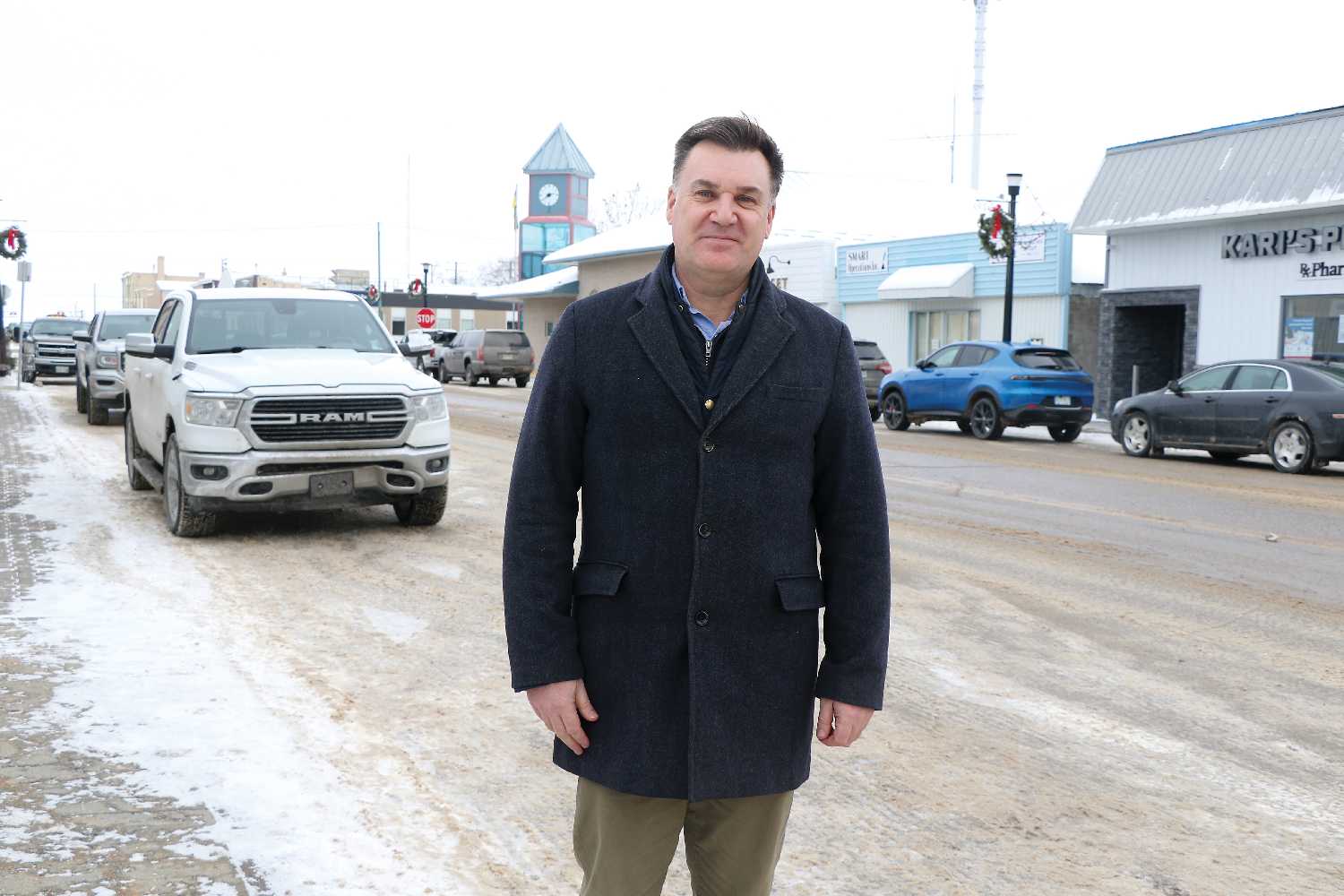

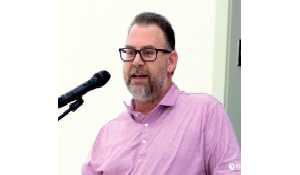
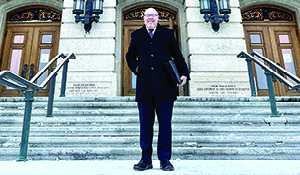
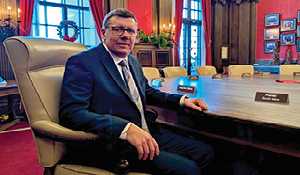
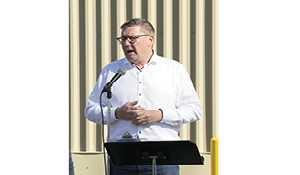
Souris-Moose Mountain MP Steven Bonk was in Moosomin last week, and sat down with the World-Spectator to talk about the next sitting of the House of Commons which starts on January 26. Bonk was newly elected as an MP in the last federal election.
What are some of the local issues you plan to deal with in the next session?
During the Christmas break I found it very useful to talk with the constituents of Souris-Moose Mountain. It seems like the concerns we have here are concerns that are echoed across the country. In terms of tariffs, people are very concerned about the canola tariffs, which hasn’t been getting much attention from the Liberal government at all. They’re also concerned with the potential of the MOU and pipeline being built in Alberta, and how that could impact the energy sector. They’re hoping that that will usher in more changes that will help our energy sector get up and running.
But there’s a real sense of pessimism on both of these fronts, where people like some of the messaging the government is putting out, but they’re still a little gun-shy because they haven’t seen any action from the government. This isn’t a new story from the Liberals, and people are wanting to see the Liberals put their money where their mouth is and get some of these projects working.
What do you see happening on these issues?
I hate to say it, but I’m fairly pessimistic on the canola front. I don’t see any real incentive for China to remove their tariffs at the moment. We’re caught in a bit of a proxy war between the U.S. and China at the moment, and Carney has worked himself into a bit of a corner. On one hand he cannot remove the tariffs on the EVs, which the Chinese have demanded as a prerequisite for removing their tariffs, but if Carney removes the tariffs on the EVs he’s going to anger Donald Trump. China has no sense of urgency to remove their tariffs because we’ve been putting no pressure on them at all. Hopefully we can resolve that.
When it comes to energy, the Liberals have been saying some positive things. But like everything the Liberals do, there’s a caveat, there’s a catch to it.
Prime Minister Carney has said in the House of Commons that Alberta needs to meet necessary and sufficient conditions for a pipeline. Basically he’s made Alberta commit to the Carbon Tax without the guarantee of a pipeline being built. At the moment it’s just a memorandum of understanding, there is no guarantee from the federal government that a project will go ahead. So until people see some shovels in the ground, and some contracts being signed, I think people are right to be a bit pessimistic.
Why are you pessimistic about the government building a pipeline?
Carney is trying to be all things to all people. He knows that to appeal to his centre and centre-right, the people who voted for him, and to try to win over the people who are in favour of a pipeline, that he needs to move on this. He needs to show some signs that he’s interested in building a pipeline.
But if you look at Carney and his ideology, his actual values, that’s actually the name of the book he wrote, Values, he is firmly in the camp of net zero. He believes that up to 50 per cent of our oil resources have to stay in the ground. He is dead set against extraction and our traditional energy sector.
He’s putting out signals that he wants to move on this front knowing that it’s going to be a very long timeline. He’s hoping that by the time a project may begin, that there will be an election where he can get a majority and cancel these projects. I think at the moment he’s trying to play both sides of the fence, and I don’t think Canadians are buying it.
Do you think the recent actions of the United States government in Venezuela will change anything?
I would hope so, although I’m not sure that it will. Common sense dictates that it should. Venezuela is a producer of heavy oil, Iran is a producer of heavy oil, and both of those regimes are crumbling at the moment. That does nothing but give us a stronger sense of urgency to get pipeline projects built in Canada, because that market is exactly what we’re competing for, and at the moment we would have the advantage. These are completely self-inflicted wounds that are being put on the Canadian oil industry. We can either displace the dirty dictator oil, or we can sit on the sidelines and watch them fill the market. Now is the time that the government should make some decisive moves.
What are some things that the Conservatives are going to push for in 2026?
One of the big things we’re going to be putting pressure on the government for is the ongoing, unacceptable affordability crisis, which again is made by government policy. People say policy matters and this is a perfect example of that. Grocery prices are rising 40 per cent faster in Canada than in the United States as an example, due to our policies. I think you’ll see the Conservative opposition really pushing government to do something on affordability. Some measures to maybe reverse some of these policies that are causing the price of food to rise so quickly.
Another issue will of course be trade. We have the CUSMA negotiations coming up soon and in short order. The Carney government has put us in a terribly week position with no bargaining chips. We’re going to be pushing our government to take stronger stances, and hopefully have some better outcomes than what we’re projecting.
Another thing that we’re going to be pressuring the Liberal government on is Bill C-9, which I think will be important to a lot of the constituents of Souris-Moose Mountain. To be honest it’s a censorship bill, where they’re going to be trying to remove the religious exemption for freedom of speech. This is something that I’ve been hearing a lot about, and that I’m quite passionate about. I think you’re going to hear a very strong chorus from the Conservatives to make sure that this it is litigated and in the public forum so that everyone is aware of what the government is trying to do.
I was listening to Christopher Hitchens the other day, and in one of his speeches, he was quoting an English author and he said something that really stuck with me. “Be wary of giving up your freedoms for security, because soon you’ll have neither,” and I’m worried that that’s what we could be facing here in Canada.
Is there anything about the next session that will be a surprise to Canadians?
I hope that Canadians get a very good surprise, and we have an election where we elect a strong Conservative majority, where we can put an end to a lot of the foolishness that we’ve had to deal with for the last 10 years.
Some other day-to-day issues that we’re constantly dealing with would be immigration. We have a lot of people who are trying to hire staff in our area because we have a very low unemployment rate compared to the Canadian average. We’re always looking for more labour, and with that comes immigration issues.
We’re also having a lot of issues with the CRA, and people having trouble with tax filings, refunds, rebates, and even just getting information from the CRA can be a bit of a nightmare. Those two are both more process issues than policy issues.
What kind of immigration issues are you seeing?
The issues I’m talking about are mostly for people who have a job waiting for them who are having trouble getting paperwork or getting answers from Immigration. In our office we have very good staff who are handling these issues, and who are making a real difference for the employers and the immigrants who are coming here.
What do you think needs to happen to improve the immigration process?
We’ve had unbridled immigration for the past 10 years, where we’ve taken in many more immigrants than we can absorb properly, and it’s caused real issues in Canada. In our area in particular we haven’t had those issues as bad, so we haven’t dealt with them as much. So there has been a real need to reform immigration. Areas like ours, we rely on temporary foreign labour. I think what you’re going to see from the Conservative Party is a more nuanced approach where we’ve called for an end to the Temporary Foreign Workers Program, and I hope with nuance we’ll make provisions for areas with unemployment rates below a certain percentage. Our approach will be more targeted and based on the needs of your labour market. Basically we want to go back to the system that was the envy of the world prior to 2015.
What are you looking forward to in the new year?
I’m really looking forward to getting back to Ottawa and holding this government to account. I think people are realizing Carney is not what was advertised, and that he sold us a bill of goods that he is not delivering on, and I’m looking forward to putting the pressure on him. Hopefully this year we can force an election and come away with a majority government.
How are you enjoying being an MP?
I’m really enjoying it. I’ve got about a year under my belt now, and it’s been really good. It’s a different issue set from provincial politics, and maybe it suits my wheelhouse a bit better when it comes to international trade and agriculture policy. Those tend to be a bit more international in nature, and I’ve been really enjoying that. I’m still on the Ag Committee, and at the moment I’m an alternate on the International Trade Committee, so they’ll bring me in to help out there sometimes as well.
Like I’ve said, since the first day I got into politics, I’ve been very focused on international trade, because that means so much to our area. We have potash, we have agriculture, we have manufacturing, oil and gas. We export almost everything we produce here. I’m looking forward to continuing to beat that drum and be a voice for this riding.