Gil Dash competes at Paralympics, says Kipling is where his love of curling got started
March 16, 2026, 4:26 pm
Donnie Matichuk
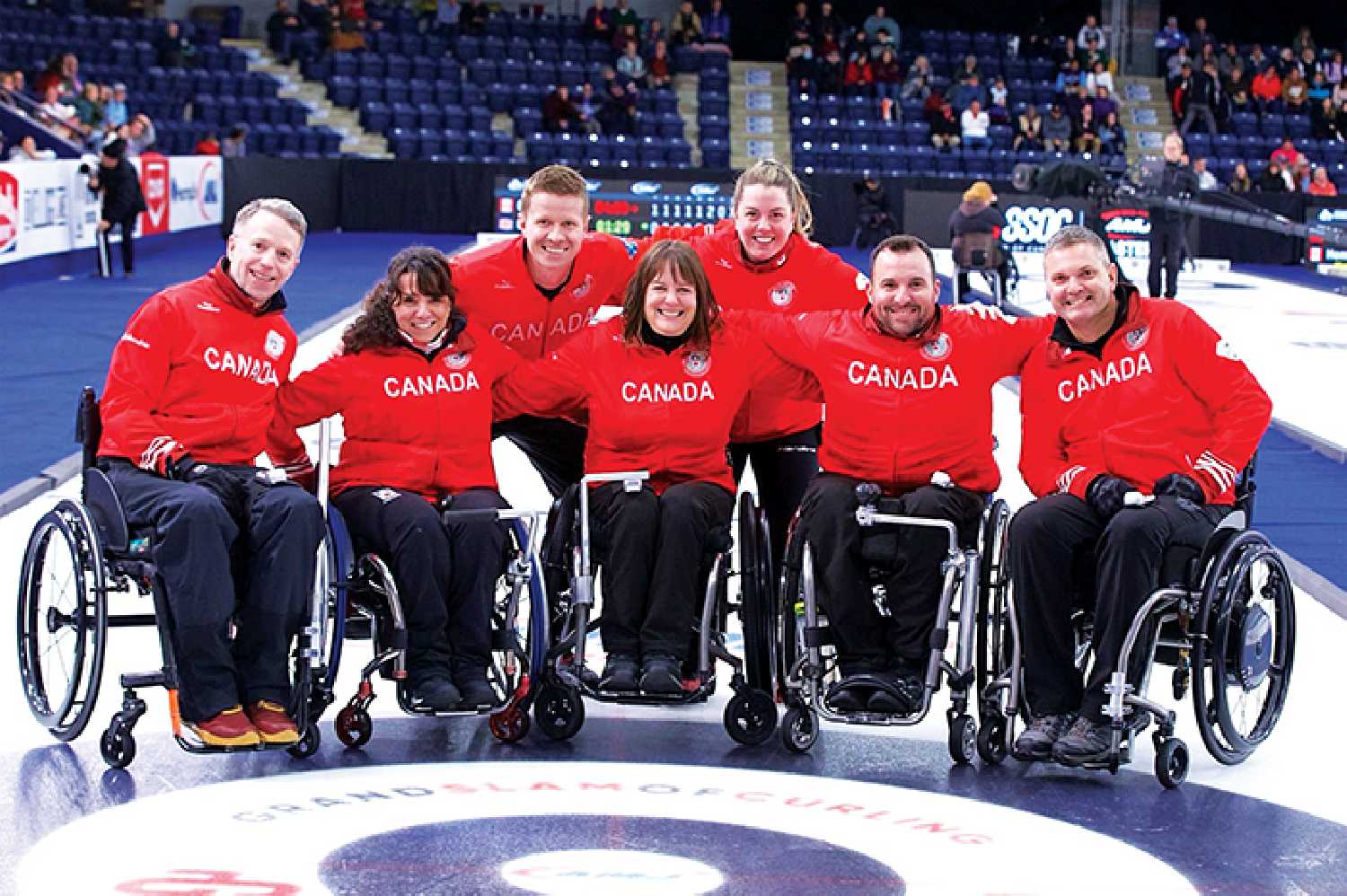

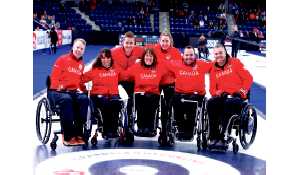
The Paralympics are the biggest stage in the world for athletes with physical disabilities, this year being held in Milan and Cortina d’Ampezzo in Italy from March 6-15. In wheelchair curling, a familiar face for some was representing Canada—Kipling’s Gilbert Dash.
Dash was born in Kipling in 1968, and from an early age, he admits to being a local rink rat.
“I grew up living in town, and all winter I was at the rink. The hockey and curling rinks are joined, so the waiting room was in between the two. I was hockey, hockey, hockey, and curled whenever I could. My dad curled a lot, with his friends and whatnot, and eventually my brother, who is five years older than me, got into it a lot as well. They would curl in the week-long bonspiels in Kipling, There was an elementary bonspiel at the end of the season, where they put a board on the ice so that it was half the normal distance for the young kids. The local people there would help us out and teach us how to curl. So that’s how I got into curling,” Dash said.
“When I was growing up, hockey was the main sport that I played, my mom was President of minor hockey at the time, and I curled whenever I could. Curling was very big in Kipling when I was in high school. There was High School Provincials, there was Junior Provincials back then that were hosted in Kipling. It was very big back when I was younger.”
He continued with sports and life after graduation, but his life changed forever after an accident left him paralyzed.
“After high school, I moved away. Everybody, pretty much had to move away after school then. There’s more people that can stay around and find jobs nowadays. I still played hockey, still curled some,” he said.
“Then I got hurt in 2006. I was ski jumping, and I crashed and broke my back. I was at Kimberly, British Columbia, and right near Kimberly in the mountains there, I damaged my spinal cord.”
While in rehab in Regina, Dash was introduced to an up-and-coming sport for wheelchair-bound athletes.
I knew there was wheelchair curling out there, and I was looking for something to do. I was definitely interested in it. One of the doctors at Wascana Rehabilitation Centre, Dr. Robert Capp, was a curler, and he helped help get wheelchair curling going around 2007 or 2008. There was another lady who was a really good curler by the name of Lorraine Arguin, she helped as well. She’s been a long time curling coach of ours until last year when she retired from it.
“With her, I’ve been part of Team Saskatchewan, and we have won five Canadian National gold medals, which is the record for national golds.
Lorraine, myself, and one other lady are the only ones to have that record.”
Gil was selected for the Canadian National Wheelchair Curling team for the first time in 2023, and has won two silver medals, and one bronze.
“Eventually I made Team Canada, which was really special for me because it’s a picked team, not like the Brier where if you win, you become Team Canada. They essentially scout you when you’re younger and then they’ll invite you to a development camp.
“I’ve been to three Worlds the past three years, and we’ve got two silver and a bronze. One was in Richmond, B.C., one was Korea, and the last one was in Scotland.” On Saturday, Team Canada was in the final against China for the Gold at the 2026 Paralympics. As of press time Friday, Team Canada was undefeated at the Paralympics.
Dash says that there isn’t a feeling quite like receiving a Team Canada jersey, as well as a specially made curling broom.
“I remember when I first got my jersey in my hotel room in Richmond. I went into my hotel room by myself, and there was all my jerseys, so that was a pretty special feeling.
“Then after that, we had a team meeting, and they gave me a curling broom. The handle had maple leaves on it, and there was one maple leaf on there for each player that has been part of Team Canada. My maple leaf was the last one that was on there, and that was pretty special and pretty cool. That’s a memory that’s always with me.”
Going into the Paralympics, Dash talked about the preparation and the mental side of going into a competition of this calibre.
“There’s so much preparation for it. During the week, it’s extremely tiring. It’s go, go, go. You’re not getting the time to sleep, you’re always on the ice and you’re using a lot of your mental toughness. The stress and the emotions really take a toll. You train basically from April till the end of the next March to go to these things.
“The mental part is just as important as staying physically healthy.
Everybody there is going to shoot well, and so staying out of your own head and the mental part is big. Right now we have four people working with our team. We’ve got our team leader, she was in the role of a mental performance consultant, and has worked with some CFL teams. He worked with Canadian National Volleyball teams, and he’s been with us now for a number of years.
There’s a another lady who’s a full time employee. She has also worked with other athletes, and then a couple other people that have just come on.”
The Canadians had a very strong Paralympic squad, with nine medals between the members of the team. In the previous 2025 World Championship, Dash was the team’s skip, but was throwing third rocks in the Paralympics.
“Transitioning positions is natural. It hasn’t been very hard at all. I skipped lots with weekly clubs. I’ve skipped lots of Provincials and Nationals, and skipped a lot going into Worlds. I was shooting third rocks, but I was all comfortable with strategy and a bit of a leadership role.
“I had some great teammates this year, Collinda Joseph, Mark Ideson, Jon Thurston, and Ina Forrest. Ina was at the 2006 Paralympics in curling, so she’s been there. She was the most decorated wheelchair curler in the world, so she is on the team. Mark, he’s been on the team since 2010 in Vancouver, and he’s been skipping for quite a long time,” Dash said.
Being adaptable and flexible on the team is one of Gil’s strengths, whether it’s skipping or throwing any position’s rocks.
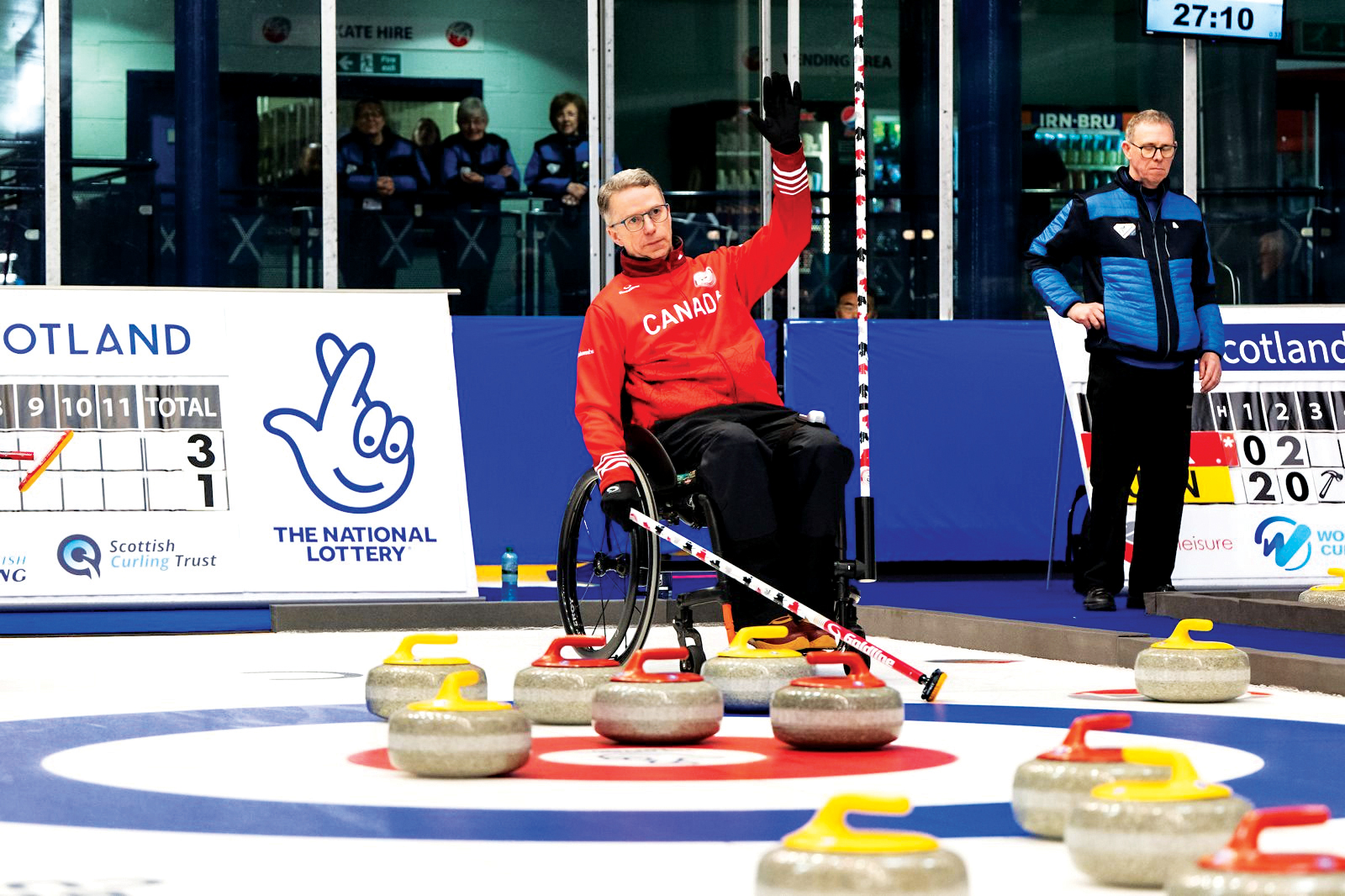
“One of the things that our mental trainer had me read was about emotional agility. Being able to adapt and focus through adversity. Being well rounded as an athlete and having the right mentality. I can play any position where I’m needed.”
“The Paralympics are the ultimate, really. Making it to the World Championships team in ‘23, that’s part of making it to the Paralympic team, to prove yourself along the way there. There’s people pushing you like crazy, teammates, coaches, everyone on staff. There’s a whole bunch of good wheelchair curlers in Canada, so I’m very proud that I’ve been able to make it onto the team each of these years. It’s lots of training and lots of practice, lots of time away from home. I had close to 70 hotel nights last year. This year we’ve got the Paralympics, so it will definitely be a challenge,” he said.
Heading into the Paralympics, Team Canada was looking to take everything as it came, and to not get to ahead of themselves during round-robin play. Dash said that they had a “trust yourself and trust your teammates” mentality.
“We’re focused on the process. Just taking everything shot-by-shot, one rock at a time. We’ve had so much prep to go all the way and win the gold. Rely on the process. Rely on all the team practice we’ve had, all the coaching, all the skills that we have bonded together. We went to quite a few things in Canada, also Switzerland, Prague, and Scotland in preparation for this moment of attending the Paralympics and preparing to do well. I have the Paralympics, and then my plan for 2026 is to continue on curling. They’ve already asked me if I’m going to, and I’ve said yes, so they are happy about that.”
He noted that representing his country and province couldn’t be more special, and that it’s very much on his mind going into Milano-Cortina.
“The community of curling, the team, the people, it’s a lifestyle. Once I got hurt, I couldn’t do able-bodied sports. This is great for mental health, it’s good for camaraderie, it’s very competitive, which is something I love. It’s also been something I’ve been able to prove myself in and do well at.
“Representing Canada as a Paralympian, it carries a huge weight when you’re holding a Canadian flag and wearing the maple leaf on your back. No matter what it is, you want to do well. I want to do well for Canada, I feel winning is what I want for Canada. Representing Saskatchewan is also really special. Saskatchewan has a relatively small curling community compared to a lot of places in the country. Representing southeast Saskatchewan, representing Kipling, all of the coaches and teammates that I’ve had over the years, my family and friends, I want to do well for all of them.”
Winning isn’t just a personal goal either, it’s also a message of appreciation for everyone who has been with Dash on his sporting journey.
“Another reason I want to win is for the first clubs that allowed us wheelchair curlers to play with them. Years ago, 10 years ago, people were like, what the heck? Wheelchairs on the ice? Some of the older players took a bit to get used to it, but the mid to younger people accepted it, and began inviting us on the ice. I was able to get better and better, and a bunch of us are able to get better and better here in Saskatchewan. So that’s why it’s for everybody that’s helped along the way.”
Dash has spoken and shared his story in many different places, and his mantra is to always give it your all and never quit. He often shares one personal story in particular.
“I’ve given a couple presentations to kids and at schools. Never give up, always keep going, go hard. I give this example.
“I was at Douglas Park watching a track race. It was 800 metres and the young guy that I was there to watch was a relative. He’s running and he’s way ahead. We’re right at the finish line. He didn’t keep going as fast as he could, and just close to the finish line, his mom yelled at him to get going. He looked and he ran as hard as he could, and he just barely won. You have to always give one hundred percent no matter what you’re doing. It’s how you get to be the best of the best.”
Competing at this high a level in any sport isn’t easy, and takes much sacrifice and help along the way. Dash appreciates all of the support he’s received over the years, from when he was a kid just starting out on the pebbled ice, to competing on the biggest stage.
“I want to recognize Ken Burton, who helped me when I was a youngster and still follows me to Kipling, and Lorraine Arguin, who has been a longtime wheelchair coach. You want to pay them back somehow, so you try to do your best because they’ve spent all this time helping you. People help you because they want to, and they want you to do good. That’s a big thing that keeps me going.
“It takes a lot of time away from family, takes a lot of time away from me and my partner Angela. My parents are older, it takes a lot of time away from me being with them. My niece was playing University hockey for five years, there’s a bunch of games I missed because of that. It’s time consuming. You have to pay your dues, and you have to have to train. I want to win. I want to prove that I’m good at it, for the people from Kipling, Moosomin, and all of the southeast that have been behind me my whole life.”
“Curling has become almost like a family for me, and I want to do my best for them as well. That’s what keeps me going. I’m not going to kid you, I have an incomplete-spinal-cord injury, and I’m always tired and feeling drained, and knowing that I’m working toward something bigger than myself keeps me in good spirits.”
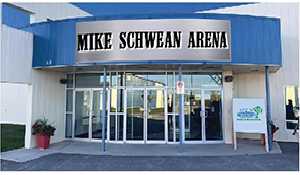
Dash is being recognized with a sign on the highway outside his hometown in Kipling, and said that he was very surprised and honoured by the gesture.
“It feels really good. I love all of it. People from town know me and it feels special to know I’m being recognized. I spend as much time in Kipling as I can. I can’t train there, but I try to be there as much as possible.
“Somebody sent me a photo and a text saying that the town of Kipling is going to put up a sign for me. Nobody had told me about it until then, and I was in shock for a bit. It was really special and humbling. It felt amazing to have an honour like that. It takes a lot to get to this point, and a reward like that is something that I won’t take for granted.”
One of the things that Dash says he was the most excited about was experiencing playing against the best wheelchair curlers in the world.
“Watching the Olympics recently over the past few weeks, it’s the emotions that have got to me. It’s going to be an amazing experience. I’m going to try my hardest to do well for Canada. I have been preparing and trying to get ready for this moment for a long time, and I’m going to enjoy it. It’s going to be a lot of work for a number of reasons, but I’m excited. I’m going there for fun, going there to win, and going there to do the best that I can. I’m excited to watch and support other members of Team Canada, and I can’t wait to get there.
“I just recently got all my Lululemon gear, and it took me 90 minutes to get all of the boxes and wrapping open. Then that’s not even our uniforms. I’m going to have nearly three suitcases of stuff I have to take.”
Before going down to the main Paralympic venues, the team practiced in Brunico in northern Italy, a two hour drive from Munich.
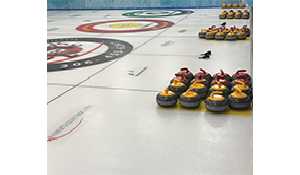
“After we flew in, we drove down to where we were training. It’s a two sheet rink, it’s really nice. Nice area and nice facilities, and we had a Canadian ice maker come over to make the ice for us to practice. We were there for roughly five days, and then on March 4 we drove the rest of the way to Cortina and moved into the village. On March 6, we had pre-event practice. We got practice on all the sheets of ice, and we get 10 minutes on each sheet. During the actual games we get eight minutes before each game on the sheet we’re on. The games began on the 7th and the finals were on the 15th.”
Dash said that going into the Paralympics, despite knowing that it would be a difficult, mentally-draining event, he couldn’t be more confident and had full faith in Team Canada.
“It’s going to come down right to the end. If we do our best, I know we can come home with the gold.”
Gold or silver finish
As of Friday, Canada had made history and finished the round-robin with an undefeated record of nine wins and zero losses for the first time ever.
They competed in the Gold Medal game against world rank number one China on Saturday. Tweet